Poor sleep from snoring or breathing disruptions is one of the most common complaints we hear at Sleeping Lab. And while many people immediately think of machines or mouthguards, one of the simplest ways to support positional management of snoring or positional OSA is to change your pillow.
To be clear, no pillow can cure moderate to severe Obstructive Sleep Apnea (OSA). But the right sleep apnea pillow can meaningfully reduce snoring frequency and severity by helping to reduce airway narrowing in some sleeping positions. Here’s how to avoid sleep apnea using your pillow.
Understanding How Gravity Affects Your Airway When You Sleep
Before choosing a pillow for sleep apnea or to reduce snoring, it helps to understand how gravity affects you when you sleep.
When you lie flat on your back, gravity pulls your tongue and soft palate backward toward your throat. This narrows the airway, creating the vibrations we hear as snoring, and in people with OSA, it can cause the airway to collapse entirely.
This is where positional therapy can help. The core idea is simple: the best pillow for sleep apnea without CPAP is one that encourages your body to adopt a sleeping position where gravity works with you, not against you.
With that in mind, here are a few sleep apnea pillows to explore and useful sleeping position tips to help you learn how to avoid sleep apnea.
Elevate Your Upper Body with a Wedge Pillow
If you are a committed back sleeper who simply cannot fall asleep on your side, a wedge pillow might be an ideal solution to prevent sleep apnea.
Unlike a standard pillow that only lifts your head, a wedge pillow elevates your entire upper torso anywhere from 10 to 45 degrees. This matters because:
- Lifting just the head can actually kink the neck forward, worsening airway blockage
- Elevating the full upper body at a modest 10 to 20 degrees reduces backward collapse of the tongue and soft tissues
- The inclined angle works with gravity to keep your airway tissues forward and open
A wedge pillow is also considered the gold standard non-medication strategy for managing acid reflux (GERD), which is a condition that frequently disrupts sleep in people with OSA. If you wake up with a burning sensation or a sour taste alongside your snoring, a wedge pillow may address both issues at once.
What to look for in a wedge pillow:
- A gradual slope rather than a steep incline for comfort
- A firm, supportive core that does not flatten under your weight overnight
Align Your Neck with a Cervical (Contour) Pillow
The height and firmness of your pillow directly affect how open your airway stays.
A pillow that is too soft or too thick ends up pushing your chin toward your chest as you sleep, compressing the upper airway. Excessive chin-to-chest positioning can significantly narrow the upper airway space, making it harder to breathe even before factoring in any underlying condition.
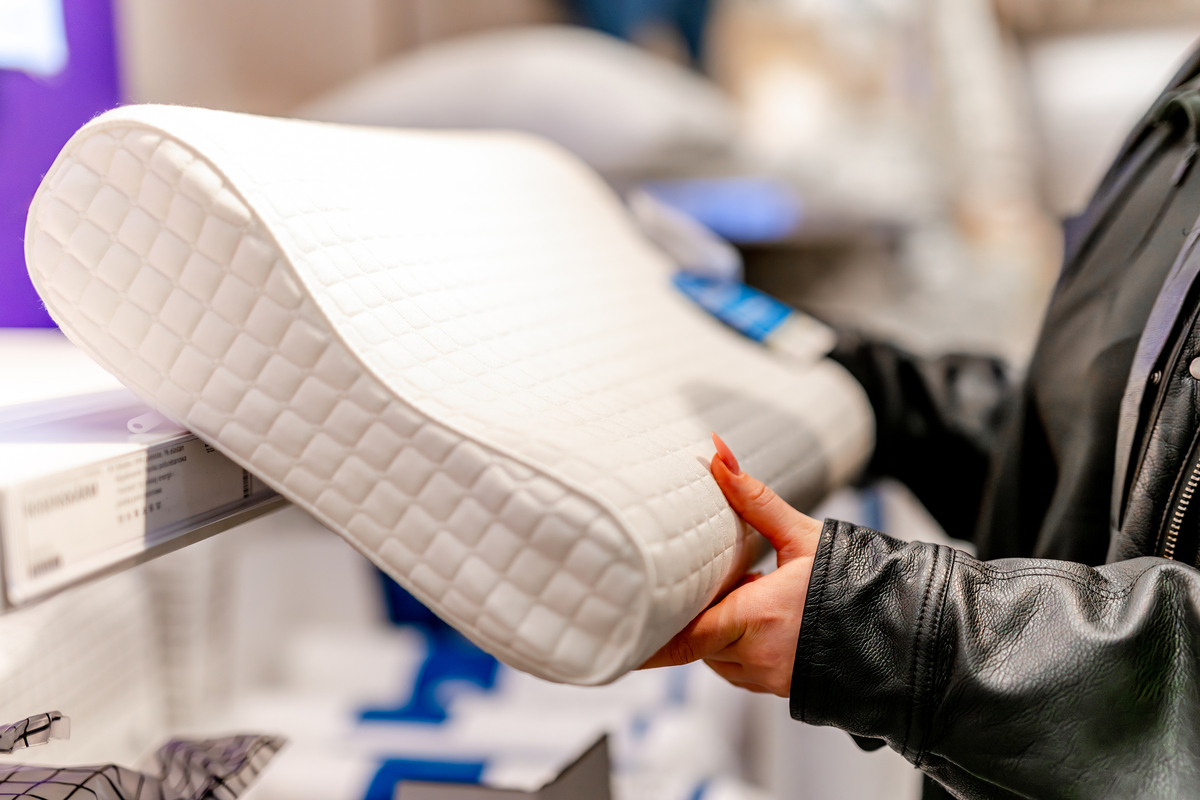
A cervical or contour pillow addresses this with a “wave” shape that:
- Cradles the natural curve of your neck
- Keeps your head in a neutral, aligned position
- Ensures the airway stays straight and open from throat to nose
For side sleepers, the higher ridge of the contour fills the gap between your ear and shoulder, preventing your neck from bending downward, which is a common cause of morning neck pain and disrupted breathing.
Encourage Side-Sleeping with a Body Pillow or Bolster
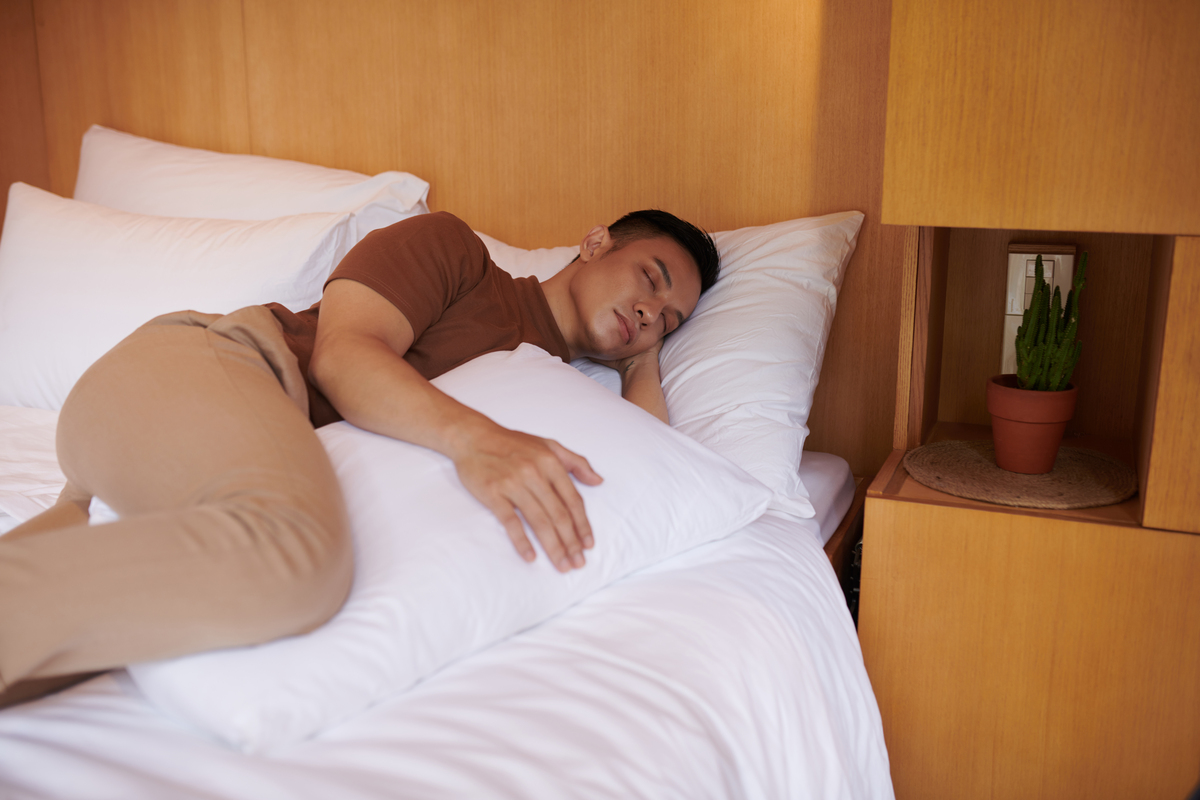
Besides the pillow you rest your head on, sleeping on your side is one of the most clinically supported ways to reduce the severity of obstructive sleep apnea (OSA). When you are on your side, the tongue falls sideways rather than backward, keeping the airway open.
However, while you may start off on your side, you may also be rolling onto your back for most of the night without realising it.
A long body pillow or firm bolster can help by:
- Giving you something to hug from the front, which stabilises your torso
- Placing it behind your back as a physical barrier to prevent rolling
- Tucking it between your knees to align the hips and make side-sleeping feel natural and comfortable
This simple addition is one of the most accessible ways to explore how to treat sleep apnea naturally and how to avoid sleep apnea events without any devices. It is low-cost, low-effort, and surprisingly effective for positional OSA.
Best Pillow Materials for Malaysia’s Climate
Even the most well-designed, best pillow for sleep apnea without CPAP won’t help if you wake up drenched in sweat and tossing around all night.
When choosing your sleep apnea pillow, don’t forget to pick materials that will help you sleep comfortably despite Malaysia’s heat and humidity.
- Natural Latex: The top recommendation due to its open-cell structure which allows air to circulate freely, making it significantly cooler and more breathable than dense foam.
- Memory Foam: Excellent for support and contouring, but traditional memory foam traps heat. If you prefer memory foam, look for gel-infused variants which help dissipate heat throughout the night.
- Pillow Covers Matter Too: Look for pillow covers made from Tencel or bamboo-derived fabrics. These materials wick moisture away from the skin and dry quickly, helping you stay cool even on the most humid nights.
Find a Solution for Sleep Apnea with Sleeping Lab
The right pillow, the right position, and lifestyle changes can all work together to meaningfully reduce snoring and mild cases of sleep apnea to improve your quality of sleep.
But if you are still waking up tired, gasping for air, or relying on coffee just to get through the afternoon despite changing your pillow, it may be a sign that something more is going on.
If adjusting your sleep position has not resolved your sleep apnea symptoms, the next step is a proper assessment. Sleeping Lab’s home sleep apnea test gives you accurate, data-driven insight into what is actually happening while you sleep so you can pinpoint what’s going on.
Visit our sleep clinic in Malaysia today to take the guesswork out of your sleep health.